Real Money Casino Table Games in Australia
 Available in AU

See how live broadcasts differ from software-run games, and how rules, formats and odds shape the table-game experience.
Table of Contents
- What Changes When a Table Game Moves Online
- Bitcoin Tables and the Limits of the Comparison
- What Table-Game Odds Can—and Can’t—Tell You
- Learning the Flow Before You Play
- Looking for a Table Game Near You
- What Counts as a Casino Table Game?
- How Table-Game Formats Differ
- Card Tables: Hands, Opponents, and Outcomes
- Roulette Rules and the Different Wheels
- Poker at the Table: The Aim Is the Hand
What Changes When a Table Game Moves Online
A table game can look familiar on a screen while working in a different way behind it. The first distinction I pay attention to is whether I’m watching a real dealer handle real equipment or seeing an outcome generated by software. Both may be presented as an online table, but the source of the result is not the same.
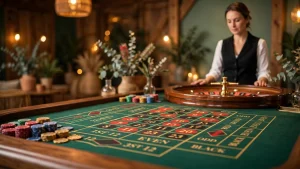
In a live-dealer format, a real dealer operates casino equipment and a camera streams the session to players. The screen gives you a view of that live activity: the dealer’s actions, the table and the physical equipment. It is not simply an animation of a dealer. What you see is a broadcast of a real game in progress.
That changes the feel of the experience. You’re watching events unfold rather than seeing a screen display only the final result. But the stream is still a video feed, not a seat at a physical table. The interface is how you view the game, and any interaction offered through it does not turn the broadcast into an in-person game.
Choosing a real-money casino for table games in Australia means checking the details that matter to you before you play. Use these verdicts as a concise reference to the information available for each operator.
1. SpinsUp
License: Curacao Gaming Control Board OGL/2023/174/0082 (Dama N.V.) SpinsUp is listed with a Curacao Gaming Control Board licence, OGL/2023/174/0082, held by Dama N.V. This gives you a specific licensing detail to consider.
2. LuckyVibe
License: Curacao Gaming Control Board OGL/2023/176/0095 (Hollycorn N.V.) LuckyVibe is listed with a Curacao Gaming Control Board licence, OGL/2023/176/0095, held by Hollycorn N.V. The supplied information identifies its licence but does not specify payment or deposit details.
3. Thor Casino
License: Curacao – Antillephone N.V. (Versus Odds B.V.) · Min. deposit: EUR 20 Thor Casino is listed with a Curacao licence associated with Antillephone N.V. and Versus Odds B.V.; its minimum deposit is EUR 20. These are the stated details to review.
4. Playfina Casino
License: Curacao eGaming (Hollycorn N.V., since 2017) · Min. deposit: A$20-30 (depends on the offer) Playfina Casino is listed with a Curacao eGaming licence through Hollycorn N.V., with the licence noted as held since 2017. Its minimum deposit is A$20–30, depending on the offer.
5. Ricky Casino
Payout speed: crypto under 1 hour, PayID 1-3 business days · Min. deposit: A$20 (A$30 to qualify for the bonus) Ricky Casino lists a minimum deposit of A$20, or A$30 to qualify for the bonus. Its stated payout times are under 1 hour for crypto and 1–3 business days for PayID.
6. Bizzo Casino
License: Curacao Gaming Control Board (TechSolutions Group N.V.) Bizzo Casino is listed with a Curacao Gaming Control Board licence held by TechSolutions Group N.V. The supplied details do not include a deposit minimum or payout timing.
7. JeetCity Casino
License: Curacao eGaming (Dama N.V.) JeetCity Casino is listed with a Curacao eGaming licence held by Dama N.V. This is the licensing information available for your consideration.
8. Roby Casino
License: Curacao eGaming (Roby Games Ltd) Roby Casino is listed with a Curacao eGaming licence held by Roby Games Ltd. No deposit or payout details are provided in the supplied information.
9. Kingmaker
Payout speed: crypto ~90 minutes, fiat 1-5 days · Min. deposit: A$30 Kingmaker lists a minimum deposit of A$30. Its stated payout timing is around 90 minutes for crypto and 1–5 days for fiat.
10. SkyCrown
License: Tobique Gaming Commission · Payout speed: crypto ~10-15 minutes, fiat 1-5 days · Min. deposit: A$30 SkyCrown is listed with a Tobique Gaming Commission licence and a minimum deposit of A$30. Its stated payout timing is around 10–15 minutes for crypto and 1–5 days for fiat.
A software-run table works differently. There is no streamed dealer producing the outcome in front of the camera. Instead, a random number generator, or RNG, determines the result. For a card game, it selects the cards dealt; for roulette, it determines where the ball lands. The animation or graphics then show that result on screen.
I used to treat a convincing animation as if it told me something about how the result had been made. It doesn’t. A digital wheel can look like a physical one, but the visual resemblance is not evidence that a real ball was spun. With a software-run game, the outcome comes from the RNG, and the display represents it.
That distinction matters more than the graphics. A polished interface can make a game feel immediate and tactile, while a live video can make an online session feel closer to a room with a dealer. Neither presentation, by itself, tells you everything about the service behind it. The key question is whether the result is generated by software or produced through the live equipment shown in the stream.
There’s also a practical difference in what you are observing. In a live-dealer game, you can follow the dealer’s handling of the equipment through the video. In a software-run version, the interface displays a result produced by the game system. Those are different ways of presenting an online game, not two visual styles for an identical process.
3-Reel Slots in Australia: How They Work
I find it useful to separate three things: the rules of the table game, how the outcome is produced, and how the result is shown to you. The rules describe what actions and outcomes mean. The production method is either live equipment with a streamed dealer or software using an RNG. The screen is the presentation layer. Confusing those layers is an easy way to read too much into a game’s appearance.
The word “live” can sound like a stamp of reassurance. In this context, it describes the dealer and equipment being real and the video being streamed. It does not, on its own, establish that a service is lawful for someone in Australia to use. I would not let a live camera, professional studio or familiar table layout distract from the separate question of whether the service is permitted here.
That legal distinction is important. Australia’s Interactive Gambling Act 2001 governs online gambling, and Section 5 prohibits operators based in Australia from offering real-money interactive casino games to residents. The law bans local companies from providing online casinos. The Australian Communications and Media Authority enforces compliance and blocks unlicensed domestic platforms.
So a search for online table games involving real money does not mean that a lawful Australian casino service is available to provide them. The format—live dealer or software-run—does not change the legal status of the service. Nor does a game’s being shown online make it a different kind of activity for that purpose. The mechanics and the legal position are separate questions, and both matter.
Legal Restriction
Under the Interactive Gambling Act 2001, it is prohibited for operators based in Australia to offer real-money interactive casino games to residents.
For software-run games, the RNG is the part that determines the dealt cards or roulette landing place; the graphics are how that outcome reaches the player. For live-dealer games, the streamed video shows a real dealer using real casino equipment. That’s the core difference. The rest is presentation.
I once gave presentation too much credit. A realistic table made the whole thing seem more transparent than it was. Now I try to identify what is actually happening before I judge what the screen suggests. Live video means a real game is being streamed; software graphics mean the result is generated by an RNG. Neither label is a reason to overlook the rules that apply in Australia.
Bitcoin Tables and the Limits of the Comparison
Bitcoin changes the payment question, not the game. A table game does not acquire different rules because a site labels it a Bitcoin table; the relevant distinction is still how the game is run and what determines its result. The coin is a way to transfer value, not a game mechanic.
That sounds obvious, but the wording around crypto casinos can blur the two. “Bitcoin table games” may suggest a special kind of blackjack, roulette or poker. It does not, by itself, tell you anything about the rules, the dealer, the software or how an outcome is produced. Those details belong to the game format, not the payment method.
I’ve learned to separate those questions before taking a claim at face value. First: what does the game actually involve? Separately: what payment method is being discussed? Then comes the more important Australian question: is the service lawful to provide here? A Bitcoin label answers none of that last question.
Mines Casino Game in Australia: What to Know
Under Australia’s Interactive Gambling Act 2001, operators must not provide real-money online casino games to people in Australia. That includes table games. The restriction applies to the service, whether a site describes itself as a crypto casino, an international casino or something else. ACMA enforces the rules and blocks unlicensed domestic platforms. A payment option does not turn a prohibited online casino service into a permitted one.
So “Bitcoin versus normal casino table games” is not really a comparison between two sets of rules. It is a comparison between a payment method and a game category. You can compare the mechanics of two table games, or ask how a particular service handles a payment, but those are separate matters. Combining them in one label can make a site sound more distinctive than the underlying game is.
The same goes for calls to find the “best” Bitcoin casino tables. Best by what measure? The payment method alone cannot establish quality, fairness, legality or suitability. Nor does a list of games demonstrate that a service is lawful for people in Australia. I would not treat a crypto badge or a polished game menu as proof of either.
There is also a practical difference between understanding Bitcoin and deciding to use it. Bitcoin is a digital payment method, but that description does not establish what a particular operator accepts, what conditions apply, or whether a transaction can be reversed. Those details depend on the service and its terms. They do not change the table rules, and they do not remove the legal restriction on providing online casino games to people in Australia.
A Bitcoin label describes a payment method, not a game mechanic, and does not change the legal status of a service under Australian law.
That separation matters when you encounter names for tabletop or felt-table games, too. They can describe the look of a game or the surface it is played on; they do not establish a distinct Bitcoin format. A search result or menu label is not enough to tell you what is actually being offered. Look past the decoration and identify whether the claim is about the game, the payment rail or the operator.
No magic coin.
I would keep the comparison narrow: Bitcoin is a payment method; table games are games; Australian law restricts operators from offering real-money online casino games to people here. One does not settle the questions raised by the others. Understanding that is more useful than treating “crypto” as a new rulebook—or as a sign that the service sits outside the law.
What Table-Game Odds Can—and Can’t—Tell You
“Best odds” sounds like a clean way to compare casino table games. I used to treat it that way: find a chart, spot the smallest house edge, assume that told me where I’d fare best. It doesn’t tell the whole story. A figure is only useful when you know what it measures and the rules behind it.
Odds can refer to the likelihood of an outcome, the payout attached to a bet, or a calculated house edge. Those are related ideas, but they are not interchangeable. A bet might be more likely to win than another while paying less when it does. And a house-edge figure is a long-run mathematical comparison, not a forecast of what will happen in a particular session.
Crash Casino Game Australia: Risks and Rules
That last part is easy to forget. A table game can produce a short run of results that looks nothing like an average. A calculation about many outcomes cannot tell you what your next hand or bet will do. It also cannot promise that you will finish ahead. No chart can do that. Not even the tidy ones.
Why comparisons need context
A meaningful comparison depends on the actual rules, the available bets and how each outcome is paid. Change one of those, and a number taken from another version may no longer describe the game in front of you. A general label such as blackjack or roulette is not enough to establish that two tables have identical terms.
The same caution applies to claims about the “worst” odds. A ranking without its assumptions can make different things look comparable when they are not. Before trusting a house-edge chart, look for a clear explanation of which rules and bets it covers, and whether the figure describes a theoretical long-run result rather than a player’s likely outcome. If those details are absent, the ranking is hard to use.
There is another trap: comparing a table-game figure with a pokie’s RTP as if both were personal return promises. RTP describes a pokie’s theoretical return across millions of spins. It is not a prediction for one player or a short session. A table-game odds figure may be calculated differently and refer to a particular bet under particular rules. Similar-looking percentages do not automatically mean the same thing.
Attention: A house-edge figure is a long-run mathematical comparison, not a forecast of what will happen in a particular session or a promise of profit.
I’ve learned to distrust a bare number. It looks precise, but precision without context is mostly decoration.
What odds can help you understand
When properly explained, odds can help show how a bet’s potential payout relates to its chance of winning, or how a game’s rules affect its mathematical expectations over time. They are a tool for understanding structure, not a shortcut to choosing a “winning” table. They do not reveal a pattern in independent outcomes or turn a previous loss into a reason to expect a win.
And the Australian legal setting matters more than any ranking. The Interactive Gambling Act 2001 prohibits operators from providing real-money online casino games to people in Australia. That includes online table games; ACMA enforces the rules and blocks unlicensed domestic platforms. A page presenting a polished house-edge chart does not change that legal position, nor does it make an online offer appropriate to access.
So, when you see claims about casino table-game odds, read the fine print around the claim rather than hunting for a universal winner. Ask what bet, rules and calculation the figure refers to. If it gives none of that, it may be catchy, but it is not a sound basis for comparing games. The number alone can’t carry the decision.
Learning the Flow Before You Play
Before thinking about how to play a table game, it helps to understand what you are watching. An online table can look like one continuous experience, but the result may come from a live game or from software. That difference matters more than a polished screen or a familiar table layout.
Bonus buy slots in Australia: rules and demos
In a live-dealer game, a real dealer uses real casino equipment, and a video stream carries the action to players. You are watching a physical game through a screen. The stream is the connection between the table and the viewer; it does not turn the dealer or equipment into software.
In a software-run version, the result is generated differently. A random number generator determines outcomes, such as which cards are dealt or where a roulette ball lands. The screen presents that result, but there is no streamed physical table producing it.
That distinction is the first thing I would check when trying to learn the flow. I used to focus on the interface—where the buttons were, what looked familiar—and missed the more basic question: what is actually determining the result? A smooth presentation does not answer that.
Watching is not the same as understanding
A live stream can make a game easier to follow visually because you see a dealer and equipment in action. But seeing the action does not automatically explain the game’s rules or tell you what a particular choice means. The video is a view of the table, not a substitute for understanding how that table works.
Software-run play can feel more direct: the screen shows the outcome without presenting a physical dealer’s actions. Yet the result still comes from the random number generator, not from a pattern you can read in the animation. I once caught myself treating a familiar-looking sequence as a clue. It wasn’t. A screen can make an outcome feel like part of a story; that feeling does not change how it was produced.
Do
- Identify if the outcome comes from a streamed dealer or an RNG
- Treat the screen as a presentation layer
Don’t
- Use a familiar interface to guess how a game works
- Treat a visual sequence as a clue to the outcome
If you are learning the general rhythm, keep the two formats separate in your mind. With a live dealer, you are following a streamed physical game. With a software version, you are seeing an outcome generated by software. Neither description tells you whether a game suits you, and neither makes the rules interchangeable.
Keep the Australian context in view
There is also a legal point that changes how this subject should be approached in Australia. The Interactive Gambling Act 2001 prohibits operators from providing real-money online casino games to people in Australia. So this is useful as an explanation of how online table-game formats differ, not an invitation to seek out or use a real-money service.
“Free play” can sound like a harmless shortcut to learning, but the label alone does not explain what a particular service offers or how it operates. I would not treat a promotional phrase as proof that a site is appropriate or lawful. The same goes for a live stream: watching a dealer on screen does not, by itself, settle those questions.
The practical takeaway is modest. First work out whether the outcome comes from a streamed dealer and equipment or from a random number generator. Then treat the display as presentation, not evidence of a pattern. That is a clearer starting point than chasing a “best” table or assuming that a familiar interface tells you how the game works.
No magic shortcut.
Lightning Link Online Pokies in Australia: What to Know
Looking for a Table Game Near You
When I see someone trying to find a casino table close by, I separate two things that can get muddled: a physical place and a website. A location-based result might point towards a venue, while an online page is not a nearby table just because it appears on a map or uses local wording. That distinction sounds obvious until you’re scanning results quickly.
A phrase such as “casino near me with table games” expresses a practical need: somewhere within reach, with tables available to play. But a search result alone can’t confirm what a particular venue offers, whether it is open, or whether its tables are operating. I wouldn’t treat a listing, photo or promotional description as proof. Check details directly with the venue before making a trip; otherwise, you may arrive with an assumption instead of an answer.
Location matters in another way, too. Searches for a casino in Miami or casinos in Ohio point to places outside Australia, not options near an Australian reader. Even a result that looks relevant in a broad search may be about a different country or a different kind of gambling. I’d check the actual location before trusting the wording.
Online play is a separate issue, not a shortcut to a nearby table. Australia’s Interactive Gambling Act 2001 prohibits operators from providing real-money online casino games to people in Australia. The Australian Communications and Media Authority enforces the rules, including blocking unlicensed domestic platforms. So an online result should not be read as an invitation or as evidence that a real-money casino table is lawful to access here.
Finding a Venue
- Confirm the venue is a physical location, not an online page
- Check the actual location to ensure it is in Australia
- Verify directly with the venue if tables are operating
- Confirm which specific table games are offered
That legal boundary is easy to miss when a page presents itself as an answer to “closest casino to me with table games”. A website can use familiar table-game language without being a physical venue, and a location label doesn’t change what the service is. I’d keep the question grounded: am I looking for a real place to visit, or have I landed on an online casino page?
There’s also a difference between finding a venue and knowing what happens at its tables. “Table games” is a broad label; it doesn’t tell you which games are offered or how a particular venue runs them. I wouldn’t assume a new listing means a new table, either. “New” is just a claim until the venue confirms what has changed.
My old mistake was treating a neat result as a reliable answer. It isn’t. A nearby search can help identify a place to investigate, but it cannot settle availability, current details or the legal status of an online service. Keep those questions separate, and don’t let a location tag do more work than it can.
What Counts as a Casino Table Game?
A casino table game is a form of gambling organised around a table and a defined way of producing an outcome. The table may be a physical setup shown through a live video stream, or a digital interface in which software determines what happens. Cards, a roulette wheel and dice are different ways of creating that outcome; they are not just different screen designs.
5-Reel Slots in Australia: What to Compare
In a live-dealer format, a real dealer operates real casino equipment, with the action streamed to viewers. The screen gives you a view of a real table in progress. In an online software version, there is no streamed physical table producing the result: a random number generator determines the cards dealt or where the roulette ball lands. The display may look like a table in either case, but the source of the result differs.
That distinction helped me get past one of the more confusing bits of casino wording. “Live” describes the dealer and equipment being filmed; it does not mean every digital table is live. And a software table is not a physical table hidden behind a screen. Different setup, different result process.
The category includes more than card play. Some table formats centre on a dealer-led game; others involve card outcomes, a roulette outcome or dice. In a dice game, players roll a pair of dice and bet on the result. That is enough to identify the basic structure without assuming that every casino offers the same games or that the rules are interchangeable.
So, when people ask what table games are in a casino, they are usually referring to games where bets are settled by a defined table-based event. The event might be a hand of cards, the position of a roulette ball, or a dice roll. The dealer can be part of the physical process, while in a software version the random number generator determines the relevant result. The word “table” describes the format, not a guarantee that you are watching a real table.
Live-Dealer Format
A real dealer operates physical equipment, and the action is streamed via video to players.
Software-Run Format
A random number generator (RNG) determines the result, which is then shown via graphics.
The same distinction matters when a site uses the phrase “table games software.” That can refer broadly to a digital presentation in which game outcomes are generated by software, rather than to a dealer-led stream. Casino table-game management software is a separate operational idea: the phrase alone does not tell you how a game’s result is produced. I would not treat a software label as proof that a real dealer is involved.
For Australians, there is also a legal boundary that matters more than the interface. The Interactive Gambling Act 2001 prohibits operators from providing real-money online casino games, including table games, to people located in Australia. A streamed dealer or a software-generated result does not change that rule. Knowing what the category means is useful; it should not be mistaken for permission to access a real-money online casino from here.
At its simplest, then, a casino table game is defined by how bets connect to an outcome—not by whether the screen looks polished, or whether the word “live” appears beside it. Cards, wheel results and dice give the category its broad shape. The details differ. The basic idea doesn’t.
How Table-Game Formats Differ
A table game’s basic format tells you what produces the outcome: cards dealt into a hand, a ball landing in a wheel pocket, or dice rolled for a result. That distinction matters more than a “best table games” label. It describes the kind of event the rules ask players to follow, not whether one format is better than another.
7-Reel Slots in Australia: Features and Free Spins
Card formats revolve around cards and the hands they create. The cards may be dealt to a player or form the basis of a hand people wager on. In an online software-run version, a random number generator determines which cards are dealt. That gives you a useful way to separate the format from the presentation: a digital table can show cards and a table layout, while the result is produced by software.
Wheel games centre on a ball and numbered pockets. In an online software version, a random number generator determines where the ball lands. It is still a wheel format, even when the display is digital rather than a physical wheel. The visible action and the process that determines the outcome are two different things.
Dice games have a different shape. The described format involves players rolling a pair of dice and betting on the outcome. The result comes from the roll, rather than a dealt hand or a ball landing in a wheel pocket. That broad distinction is enough to identify the format without assuming that every dice table uses the same rules.
I find it easier to think in terms of the event first and the screen second. “Live” describes a presentation involving a real dealer and casino equipment streamed to players; software-run versions instead use a random number generator for card deals or roulette’s ball landing place. Those are different ways of producing or showing a game, not extra categories of outcome. A card game remains card-based, whether you see a dealer or a digital interface.
Table Game Formats
- Card formats revolve around dealt hands and specific wagers
- Wheel games center on a ball landing in numbered pockets
- Dice games involve rolling a pair of dice to determine the result
- Live and software formats are different ways of producing or showing these games
The word “best” can make a casino table-game list sound like a simple ranking. But the format alone cannot establish which game is best for you. Cards, wheels and dice ask you to follow different kinds of outcomes; the label does not settle how you will feel about the rules or the experience. I’ve learned not to treat a polished table screen as proof of anything beyond its presentation. Looks are not mechanics.
There is also a legal boundary in Australia that belongs in any discussion of real-money online tables. The Interactive Gambling Act 2001 prohibits operators from providing real-money online casino games to people in Australia, including card, roulette and dice-style casino games. So a comparison of formats is not an invitation to seek out an online casino. Keep the categories clear: the object of the game explains its format, while the law governs whether real-money online casino play may be offered here. Different questions. Different answers.
Card Tables: Hands, Opponents, and Outcomes
Card tables can share a surface and still ask you to think about the result in different ways. In one game, your hand is measured against the dealer’s. In another, the wager is about which hand will come out ahead, or whether the result will be a tie. Poker shifts the focus again: players try to make the strongest hand. The cards are common ground; the contest is not.
Blackjack is the clearest example of a player-versus-dealer setup. The aim is to finish with a hand value closer to 21 than the dealer’s. That framing matters. You are not trying to beat every other person at the table; the comparison is between your hand and the dealer’s. I find that easier to keep straight than the table chatter can make it seem.
Best Pokies in Tasmania: Hours, Venues and Checks
Other card-table betting can be framed around the outcome between a player’s hand and the Banker’s hand, with a tie as another possible selection. That is a different proposition from trying to improve your own hand against a dealer. Before treating two card games as interchangeable, check what the wager actually refers to: your hand, another hand, or the relationship between them. Small distinction. Big difference.
Poker is built around hand-building and competition between players. The aim is to produce the best possible Poker hand. That is the useful starting point; beyond it, the exact play depends on the particular form of poker, so the broad label alone does not tell you every rule. I used to hear “skill game” and assume that settled the matter. It doesn’t. The objective is only one piece of how a game works.
These descriptions explain mechanics, not an invitation to play. In Australia, the Interactive Gambling Act 2001 prohibits operators from providing real-money online casino games, including card games, to people in the country. A page describing how hands and wagers are structured should not blur that legal boundary.
So when you hear “card table games,” don’t assume there is one shared contest. Blackjack compares a player’s hand with the dealer’s; another format can centre on a player hand, the Banker’s hand, or a tie; poker has players competing to build the strongest hand. Same cards. Different question.
How does Blackjack differ from Poker?
Blackjack is a player-versus-dealer setup aiming for a value closer to 21, while Poker is a competition between players to build the strongest hand.
What is the aim of card-table betting?
Depending on the game, it can be beating a dealer, wagering on the outcome between a player and a Banker, or competing against other players.
Roulette Rules and the Different Wheels
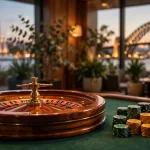
Roulette is easy to recognise: a ball lands in a numbered pocket, and the wheel’s layout determines which numbers are in play. The main online formats are European, French and American roulette. Their names matter because the pockets are not arranged in exactly the same way.
European and French wheels have numbers from 1 to 36, plus a green zero. The American wheel has those numbered pockets along with a green zero and a green double zero. That extra pocket changes the wheel’s layout, so it is worth checking which format is shown before you try to follow a round. I have skimmed past that detail before and then wondered why the table looked unfamiliar. Easy mistake.
The basic rules depend on the bets offered at a particular table, so do not assume every interface presents them identically. Look at the displayed wheel and the table’s instructions rather than relying on a memory of another version. Knowing whether the wheel has a single green zero or both zero and double zero is a useful first check; it does not tell you what the next result will be.
Online roulette can be presented through software or as a live-dealer game. In the software version, a random number generator determines where the ball lands. With live dealer play, a real dealer and casino equipment are shown in a live video stream. The stream lets you watch a physical round, while software-generated play displays an outcome produced by the system. Neither format makes a previous result a guide to what comes next.
There is also an important Australian context: real-money online casino services, including roulette, are prohibited for operators serving people in Australia under the Interactive Gambling Act 2001. ACMA enforces the rules and blocks unlicensed domestic platforms. So this is a description of how roulette formats differ, not an invitation to access real-money play.
Pokie Machines in Australia: Legal and Play Guide
If you encounter a roulette layout in an informational or non-wagering setting, take a moment to identify the wheel and read its rules. The green pockets are the detail people overlook. Don’t guess.
Poker at the Table: The Aim Is the Hand
Poker is built around a simple contest: players try to make the best possible hand. That is the central idea, whether you encounter the game described as casino poker or see it referred to as a poker table game. The aim is the hand—not simply being seated at a table or watching cards appear.
I used to hear “battle it out” and picture a lot of drama. The underlying objective is more straightforward: each player is trying to assemble a hand that can stand above the others. That gives poker its competitive shape. You are not just following a dealer’s result; the point is to compare the hands players build.
That broad description is enough to distinguish poker from a table game defined by another kind of outcome. It also sets a sensible limit on what the word “poker” tells you. A label alone does not explain the precise rules, the way a particular game handles hands, or what a table’s conditions are. Those details should not be guessed from the name.
People sometimes look for different types of casino poker games, or for a particular version such as pai gow poker. The shared idea remains the hand-building contest, but the label by itself is not a rulebook. I would not assume that every poker table works the same way just because it uses the same broad name.
There is a legal point that matters in Australia: the Interactive Gambling Act 2001 prohibits operators from providing real-money online poker to people located in the country. So this is a description of the game’s objective, not an invitation to find or use an online table. The distinction is worth keeping clear. A simple aim; a serious boundary.
Can you play table games online for real money?
Yes, offshore platforms may accept Australian players for real-money table games. Australian-based operators are prohibited from offering these games to residents.
Can you guarantee winning at table games?
No. Table-game outcomes are determined by live equipment or an RNG, and neither guarantees a win.
Do casino bonuses actually benefit table game players?
They can, but blackjack and roulette may contribute only 10–20% toward wagering requirements, and some games may be excluded. Check the bonus terms for game contributions, wagering requirements and maximum bet limits.
Casino Games

3-Reel Slots in Australia: How They Work
A practical guide to classic layouts, RNG independence, RTP, free play and checking access before...
5-Reel Slots in Australia: What to Compare
Compare game rules, bonus features and paytables while keeping in mind that each spin is...

7-Reel Slots in Australia: Features and Free Spins
A practical look at bonus triggers, free-play limits, access checks and why a seven-reel label...

Online pokies in Australia: what to know
A practical guide to offshore real-money pokies, including legal risks, wagering terms, payment methods and...

Aussie Online Casinos: Legal and Safety Checks
Australia has no domestically licensed online casinos, so assess operator claims, payment limits and withdrawal...

Best Aussie Pokies Online in Australia: What “Best” Means
A practical look at free-play wording, Australia’s real-money legal catch, payment claims and bonus conditions....

Australian online pokies: rules, payments and risks
The guide separates operator restrictions from player exposure and explains how deposits, bonus conditions and...

Bonus buy slots in Australia: rules and demos
A practical look at Australian restrictions, demo limits, game features and the details worth checking...
Best Casino in Adelaide: Venue and Visitor Guide
A practical guide to Adelaide Casino, nearby accommodation and details to verify before making plans....

Casino in Brisbane: What to Check Before Booking
Hotel listings, room offers, poker, dining and venue facilities need current checks before they can...

Canberra Casino: Hotels, Deals and What to Verify
A practical guide to checking accommodation claims and interpreting searches for casino facilities, dining, parking,...

Casino in Darwin: Events, Gym and Development Claims
The article distinguishes operating facilities and hosted events from nearby venues, proposals and broad development...

Hobart Casino: What to Check Before You Go
Poker availability, tournament entry, accommodation, dining and facilities can vary, so current venue information matters...

Melbourne Casino Guide: Hotels, Dining and Visits
A practical guide to casino hotels, dining, events and the details that can shape a...

Perth Casino Hotels and What to Check Before Booking
A practical guide to checking hotel terms, nearby stays, facilities, dining, access and the limits...

Best Casino in Queensland: Venue and Online Guide
A practical guide to checking venue facilities and understanding why Queensland-themed online casino results may...

Sydney Casino Stays: What to Check Before Booking
Room terms, cancellation conditions and on-site amenities all need verification before a casino stay is...

Tasmania Casino Guide: Stays, Poker and Practical Checks
A practical guide to verifying accommodation and making sense of searches about poker, transport, dining...
Best Casino in Victoria: Rules and Venue Facts
A clear guide to online casino rules in Victoria and the venue, hotel and amenity...

Best Casino in Western Australia: What to Check
A practical guide to booking conditions, nearby accommodation and the venue details to verify before...

Fast Payout Online Casinos in Australia: What to Check
A practical look at processing, limits, verification and payment conditions that can affect when an...

High-Volatility Slots in Australia: How They Work
A practical look at volatility, RTP, bonus stages and jackpots—and why none can make a...

Instant payout casinos in Australia: the real limits
Withdrawal rules, payment methods and the lack of Australian licensing all shape what an offshore...

Keno Online Casinos in Australia: Legal and Site Checks
The guide separates Australian law from offshore claims and explains why site terms, verification and...
Live Casino Online in Australia: Legal Guide
Australian law and offshore operators shape what live-casino claims can reliably establish. The Australian live-casino...

Live dealer casino online in Australia: legal facts
Live-dealer format does not change the legal position, and offshore-site claims need careful scrutiny. The...

Low Volatility Slots in Australia: What to Know
Low volatility describes a tendency toward frequent, smaller wins, not a promise of returns or...

Pokie Machines in Australia: Legal and Play Guide
A practical look at Australian online pokie rules, game differences, bonus terms, odds and the...

Pokies in Adelaide: how to check venues and hours
Venue opening hours do not confirm that pokies are operating, so direct checks matter when...

Best Pokies in Brisbane: Hours, Venues and Checks
A practical guide to checking Brisbane venue details, gaming-area availability, online search claims and location...

Best Pokies in Canberra: Hours and Venue Checks
Venue opening hours do not confirm that pokies are operating or available, so current details...

Pokies in Geelong: opening hours and venue checks
Venue schedules can differ from pokies access, so current official updates and a direct call...
Best Pokies in Melbourne: Venue Checks and Realities
Practical checks cover airport-area listings, venue hours, local areas and what payout reporting can—and cannot—show....
Best pokies in New South Wales: venue and access guide
A practical guide to NSW venue rules, location searches, and the limits of what available...

Pokies in Perth: Check Venue Hours Before You Go
Listings can be outdated, and general venue hours may not confirm when gaming facilities are...
Best pokies in South Australia: what to check
A practical guide to location checks, online legality, venue hours and safer-play limits—without treating past...

Best Pokies in Sydney: Venues and Online Play
A practical guide to Sydney venue searches, online pokies, opening checks and responsible play. Finding...
Best Pokies in Tasmania: Hours, Venues and Checks
A practical guide to checking venue hours, pokies availability and what “best-paying” can—and cannot—mean. Before...

Progressive Jackpot Slots: How They Work
Progressive pokies draw small shares from real-money wagers, but jackpot size and payback figures do...

Online pokies for real money in Australia: checks
The guide separates operator legality from player liability and explains how payment methods, promotions and...

RTP Pokies in Australia: How Returns Work
RTP is a long-run theoretical measure of wagers and returns, not a prediction of what...

Best RTP Slots in Australia: Reading RTP Clearly
RTP describes theoretical returns across vast volumes of play; it does not predict results in...

Video Slots in Australia: How Online Spins Work
A practical guide to free play, Australian access, slot features and RTP, without treating patterns...

Big Red Pokies Online Australia: Free Play Guide
Free play can familiarise players with controls, but it does not establish future results or...

Casino Dice Game in Australia: Legal Basics
A dice format or offshore licence does not establish that an online casino service is...

Crash Casino Game Australia: Risks and Rules
A rising multiplier creates a simple choice, but cashout timing, uncertain outcomes and withdrawal terms...

Lightning Link Online Pokies in Australia: What to Know
The guide distinguishes the Lightning Link name and game features from online services and real-money...

Live Baccarat Online in Australia: Legal Guide
A practical overview of Australian legal status, live-dealer and RNG formats, hand rules, site limits,...

Live Blackjack Online in Australia: Rules and Checks
A practical framework for assessing legal claims, live-dealer features, site information and blackjack guidance without...
Live Roulette in Australia: English-Speaking Dealers
This guide explains Australian online casino rules and how to assess live dealers, roulette formats,...

Mines Casino Game in Australia: What to Know
A guide to identifying the game, assessing demos and bonuses, and checking what online listings...
Online Casino Trust in Australia: Claims to Check
Understand how licensing, payment options, withdrawal rules and game claims affect the protections available to...

Plinko Casino in Australia: Reviews and Real-Money Play
A practical look at game labels, review evidence, free play, bonus conditions and payment considerations...

Pokies Tips and Tricks: What the Odds Really Mean
A practical look at RTP, session budgeting, game randomness, site checks and bonus conditions for...